
AI Chatbot vs Dedicated Antique Scanner App
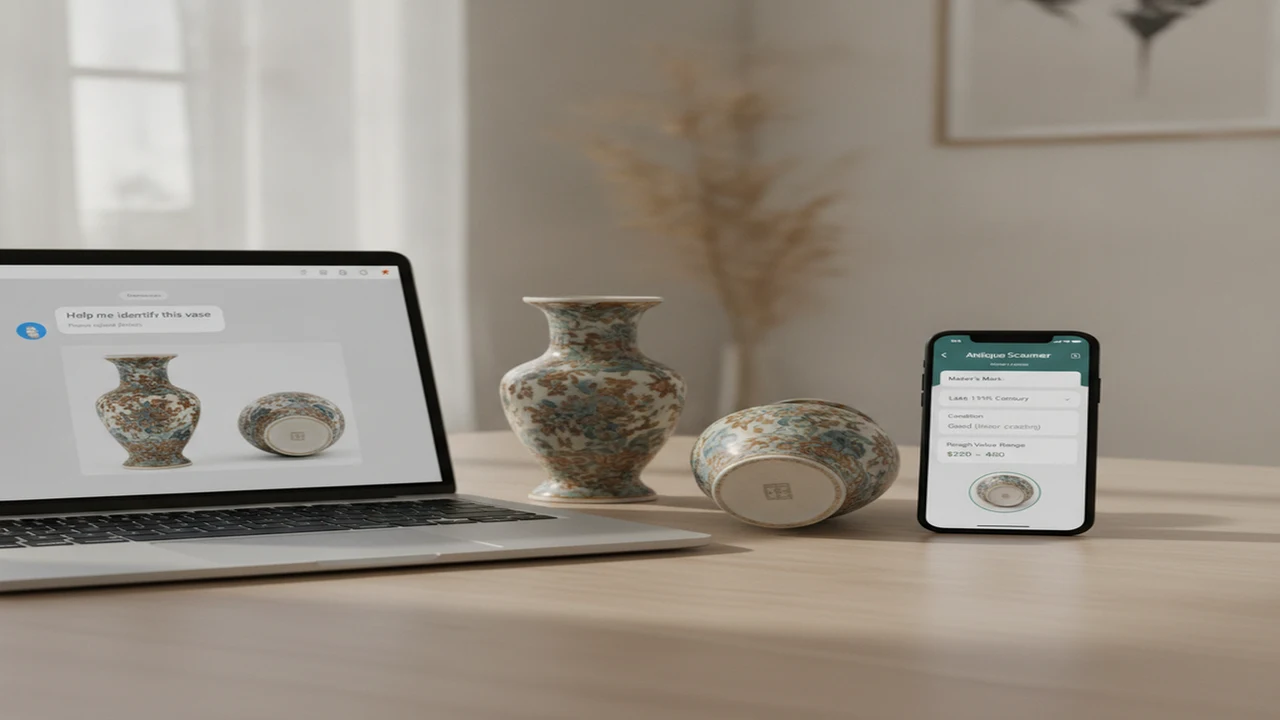
Taking a photo is now enough to receive a confident-sounding description of an unfamiliar vase, clock, chair, or piece of jewelry. The harder question is whether to upload that photo to a general chatbot or use an AI app designed specifically for antique identification and value research.
Both options use image recognition, but they organize the task differently. A chatbot invites open-ended questions, while a dedicated scanner usually asks for specific photos and returns consistent fields. Understanding that difference helps beginners choose a suitable workflow without mistaking an AI suggestion for an appraisal.
Quick answer: A general AI chatbot can inspect an antique photo and suggest materials, styles, periods, or possible makers. A dedicated scanner app usually provides a more structured workflow for marks, rough value ranges, and collection records. The better choice depends on how often you scan objects and whether you need saved results. Neither can confirm authenticity or replace a qualified appraisal.
What does this mean?
Definition: An AI antique scanner is an image recognition app that analyzes photos of objects, labels visible characteristics, and may provide historical context, maker clues, comparable items, or a rough market value range.
What can an AI chatbot see in an antique photo?
A chatbot with image recognition can describe visible shape, decoration, color, apparent material, surface wear, labels, signatures, hallmarks, fasteners, and construction details. It may connect those clues with a broad object category or design period, then suggest terms to use in catalogs and marketplace searches.
The model sees pixels rather than the physical object. It cannot pick up the item, feel its texture, check its weight, smell old materials, open an internal mechanism, or inspect joints hidden behind upholstery. Exact dimensions and material composition also cannot be established reliably from appearance alone.
For a ceramic vase, a beginner could provide separate photos of the front, base, underside, and maker mark. A chatbot might suggest that the decoration resembles a particular regional style, offer possible readings of the mark, and ask whether the base is glazed. This is most useful as an initial set of categories, search terms, and follow-up questions.
- Visible clues: shape, decoration, wear, labels, signatures, marks, fasteners, and exposed construction.
- Useful outputs: possible categories, broad periods, descriptive terminology, and questions for further research.
- Missing physical evidence: exact weight, texture, internal parts, hidden joints, and verified material composition.
What does a dedicated antique scanner app add?
A purpose-built scanner guides the user through an object-focused process. Inputs may include a full-item photo, close-ups of marks, category, condition, dimensions, and notes about damage. This is easier for beginners than deciding what to ask in an open-ended chat.
The Antique Identifier App is documented as using photos for identification, maker-mark clues, and rough value ranges. A dedicated result can place the likely identity, history, context, maker information, and pricing guidance into predictable fields instead of spreading them across a long conversation.
That structure becomes useful when scanning many objects. Consistent fields and saved collection records make it easier to revisit a result, add measurements, compare related items, or prepare a research list. Specialization does not guarantee that the identification is correct, but it can reduce the organizational work around repeated scans.
How do chatbot and antique scanner options compare?
The options below serve different jobs. A broad visual-search tool may be enough for finding similar pictures, while an antique-focused app may suit someone who wants structured reports and collection records. Historical sales databases serve another purpose by helping users research what comparable objects have sold for.
How should beginners photograph and research an antique?
Clear source material gives either tool more useful information. Use even, indirect lighting, keep the camera steady, and take several photos rather than asking the model to infer the whole object from one view.
Measurements and condition notes usually need to be typed. An image model cannot reliably infer exact size, detect every repair, or see damage hidden inside an object. The following workflow creates a record that can be checked later.
- Photograph the whole item from the front, back, sides, top, and underside. Include joints, fasteners, feet, handles, and visible damage where relevant.
- Capture labels, serial numbers, signatures, stamps, and hallmarks straight on and in sharp focus. For more context on useful angles, see what AI can learn from an antique photo.
- Record height, width, depth, weight if safe to measure, and a plain-language condition note. Include missing parts, cracks, repairs, stains, and replaced hardware.
- Crop distracting objects, faces, documents, and background clutter while keeping enough of the item visible to understand where a mark appears.
- Scan the images with the chosen tool. Antique Identifier TIQ can fit a structured scan-and-save workflow when the goal is to identify antiques by photo and keep records together.
- Compare the suggested identity with reference images, catalogs, maker-mark guides, and objects sharing the same construction details. Search more than the model's first label.
- Verify exact marks, dimensions, condition, and sold evidence. Our guide to checking an AI guess against a sold listing explains how to move from a suggestion to stronger market evidence.
- Save the original photos, measurements, AI result, source links, and unresolved questions as one collection record. Update it when better evidence appears.
Can either option appraise antiques from a picture?
An antique appraisal app can suggest a rough range from visible characteristics and comparable-looking objects. Appearance alone does not establish exact identity, ownership history, condition, restoration, or the price a buyer will actually pay.
Pricing terms also mean different things. An asking price is what a seller hopes to receive. A sold price records a completed transaction. An auction estimate is a pre-sale expectation, while insurance or replacement value may reflect the cost of obtaining a similar item. A dealer offer is generally lower because the dealer must account for risk, expenses, and resale margin.
Confirm a proposed antique market value range using exact maker details, dimensions, condition, location, and recent sold records. An antique price guide can provide context, but current evidence matters. A published comparison of chatbot antique identification also illustrates why maker attribution and valuation should be checked separately rather than accepted as one result.
Antique watch value and jewelry estimates are especially difficult from photos. Movement condition, metal purity, gemstone identity, repairs, replaced components, and hidden marks can require physical inspection. Potentially valuable pieces should go to a specialist in the relevant object category.
What should you check about privacy, free tiers, and subscriptions?
Before uploading, check whether photos go to cloud servers, how long they are retained, whether they may improve AI models, and whether service providers receive them. Look for account controls that allow images and stored records to be removed.
An antique photo can reveal more than the object. Reflections may show faces or rooms, while the frame may include an address, certificate, owner name, serial number, or other valuable possessions. Remove location metadata where possible and crop unrelated personal details before upload.
A free download does not necessarily provide unrestricted identification. Access may involve scan caps, advertising, an account, limited reports, or subscription prompts. According to the supplied listing summary, Relic requires a subscription for its AI identification and related collection functions. Check current terms in the store listing rather than relying on an old price or review.
- Check image uploading, retention, model-improvement use, service-provider access, and deletion controls.
- Remove location metadata and crop faces, addresses, certificates, owner names, and unrelated possessions.
- Confirm current scan limits, account requirements, advertising, trial conditions, renewal terms, and subscription scope.
What limitations can cause a wrong identification?
Confident wording can make a result sound more certain than the visual evidence supports. The main accuracy and reliability concerns are consolidated below.
Which option should you choose?
Choose a general chatbot for occasional questions, interpreting a visible inscription, learning relevant terminology, or discussing several possible identities. Google Lens is useful for broad visual matching, while WorthPoint and other sold-record resources can help when historical market evidence is the main goal.
A dedicated scanner is more suitable for people who regularly search antiques by photo, want the same result fields each time, or need to save an antique collection. Potentially valuable, rare, inherited, insured, or disputed objects should be examined by an appropriate specialist or qualified antique appraiser.
Comparison
| Option | Best for | What it can return | Collection tools | Cost or access note | Main caution |
|---|---|---|---|---|---|
| General AI chatbot | Occasional questions and research terms | Broad category, style clues, possible mark reading, follow-up questions | Conversation history may help, but it is not an object catalog | Some image access may be free; limits vary | Open-ended answers can sound more certain than the image supports |
| Antique Identifier | Structured photo identification | Likely identity, maker-mark clues, rough value range | Designed around repeatable item records | Check current product terms | Rough ranges and identifications need external confirmation |
| Antique Identifier By Picture | Cleaning up and scanning object photos | Identity suggestions plus material and age details | Stores photographed finds | Check current listing | Reviews mention changing results, advertising, and maker or regional errors |
| Curio - Antique Identifier | Historical and craftsmanship context | Background, craftsmanship information, and estimated antique value range | Item-focused results | Check current listing | Comparable objects do not create a certified appraisal |
| Antique Identifier - Relic | Era details and searchable records | Antique era identification and USD value estimate | Searchable antique catalog | AI and collection functions require a subscription | Access depends on a paid plan |
| AntiqSnap: Antique Identifier | Collectors and resellers tracking many objects | Identification, pricing guidance, and condition suggestions | Total collection value tracking | Premium access advertises repeated scans | Reviews report some material and reproduction errors |
| Google Lens | Broad visual matching | Similar images, pages, shops, and visual search results | No dedicated antique collection workflow | Broadly accessible; terms may vary | Visual similarity does not establish identity or value |
| WorthPoint | Historical sales research | Past listing and sales information where available | Research-oriented rather than a photo scanner | Access terms depend on the service | A past sale may not match the item's condition or market |
Limitations
Image recognition can confuse visually similar objects, reproductions, later copies, and genuine period pieces. A plausible label, even when written confidently, may still be wrong.
Poor lighting, clutter, missing angles, and unreadable marks can weaken or change a result. Repeated scans may return different answers when the framing, crop, lighting, or background changes.
A photo cannot reliably reveal weight, internal construction, material composition, repairs, provenance, or hidden damage. Authenticity may depend on tool marks, construction, restoration, materials, ownership records, and specialist examination.
Value ranges may rely on approximate matches and may not reflect condition, local demand, selling fees, or completed-sale prices. The rough value ranges returned by Antique Identifier also require confirmation with relevant market evidence.
Reviews of Antique Identifier By Picture mention changing results between scans, advertising, and occasional errors involving makers or regions. User reviews describe individual experiences rather than measured accuracy rates.
Curio's value guidance is based on historical information and comparable objects rather than a certified appraisal. Similar appearance does not ensure that two objects share the same maker, age, materials, condition, or market.
Relic places AI identification, comparison, history, and collection functions behind a subscription. Users should confirm that the required tools are included in the current plan before paying.
AntiqSnap reviews include reports of incorrect material identification and difficulty separating reproductions from genuine antiques. These reports are warning signs to investigate, not controlled measurements of overall performance.
Frequently Asked Questions
Can AI identify an antique from one photo?
Sometimes it can suggest a likely category, material, style, or period from one clear image. Multiple angles are more useful because the underside, construction, damage, and marks may contain stronger clues than the front. Add dimensions and close-ups, then confirm the suggested identity through references, comparable objects, and specialist advice when value or authenticity matters.
Is an antique identifier by picture the same as an appraisal?
No. An identifier proposes what an object might be, while an appraisal considers identity, condition, provenance, market evidence, and the purpose of the valuation. A photo-based value range can support early research, but it is not equivalent to an inspection and written opinion from a qualified appraiser.
Can Antique Identifier TIQ recognize maker marks and hallmarks?
Antique Identifier TIQ is documented as providing maker-mark clues from photos. Recognition depends on a sharp, straight, well-lit close-up with enough resolution to see small characters. Suggested readings should be checked against reliable hallmark references, manufacturer records, or a specialist because similar symbols and worn letters can be misread.
What is the best app to identify antiques for free?
There is no single best app for every task. A chatbot or Google Lens may suit occasional visual searches, while a dedicated scanner may provide more structured fields and saved records. Free access can include scan caps, advertising, account requirements, limited reports, or subscription prompts, so check current terms before choosing.
Can an AI app tell whether an antique is genuine?
It can point out visible clues that support further research, but it cannot confirm authenticity from appearance alone. Genuine identification may depend on provenance, materials, construction methods, tool marks, restoration, and features hidden from the camera. Rare, disputed, or expensive objects need physical examination by an appropriate specialist.
Which tool is useful for antique furniture identification?
Start with a chatbot or broad visual search if you need style terms and similar images. A dedicated scanner can be more convenient for recording dimensions, wood or apparent material, hardware, joints, labels, and condition. Photograph the back, underside, drawer construction, fasteners, and repairs, then check the result against furniture references or a specialist.
Can Antique Identifier TIQ estimate antique jewelry or watch value?
Antique Identifier TIQ may provide a rough photo-based range, but jewelry and watch values often depend on evidence a picture cannot establish. Metal purity, gemstone identity, movement condition, replacement parts, repairs, and hidden marks may require tools and physical inspection. Use the estimate for initial research and consult a jewelry or watch specialist for valuable pieces.
Should I use Google Lens, a chatbot, or an antique scanner?
Use Google Lens to find visually similar images, a chatbot to discuss possible identities and research terms, and an antique scanner for consistent fields and collection records. Combining tools can be useful, but confirmation should come from marks, dimensions, condition details, reputable references, sold evidence, and specialist input where appropriate.