
AI Antique Identifiers: A Beginner’s Guide to Photo Recognition and Value Research
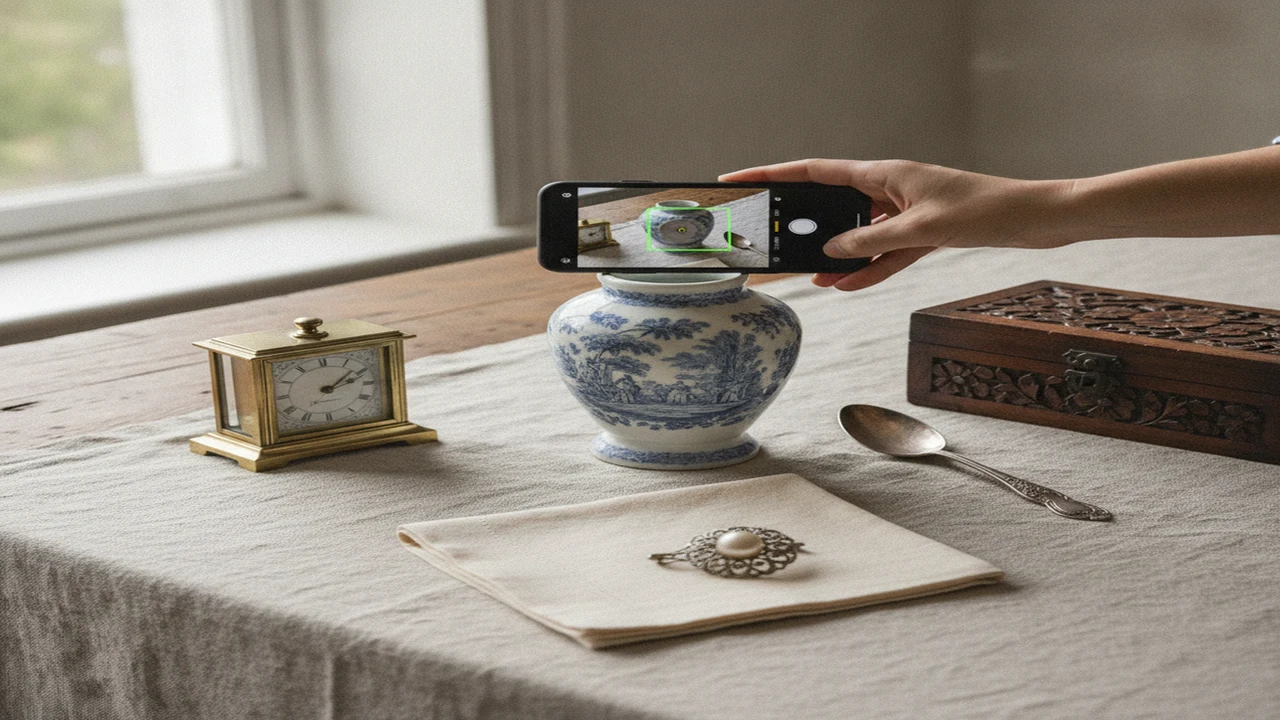
AI antique identifiers can give beginners a useful starting point when an unfamiliar vase, clock, chair, piece of jewelry, or decorative object has no clear label. The software looks for visual patterns such as shape, material, decoration, construction, and maker marks. It then matches those details with information learned from other images and descriptions.
The result is usually a possible identification rather than a formal appraisal. A clear suggestion can help you choose better search terms, find similar objects, and decide which details deserve closer attention. Our guide to what AI can learn from an antique photo explains which visible clues tend to be most informative.
This category brings together beginner guides on choosing an app, taking useful photographs, checking sold listings, and deciding when specialist advice is appropriate. The goal is not to replace an appraiser. It is to make the early research stage faster and more organized.
Quick answer: AI antique identifiers are best used for narrowing down an object’s category, style, possible maker, and useful search terms. Photograph the whole item, marks, damage, and construction details. Then confirm the suggestion with reliable references and completed sales. A photo-based value should be considered a rough research range, not a guaranteed selling price or professional appraisal.
What does this mean?
Definition: An AI antique identifier is an app or image-recognition tool that examines photos of an older object and suggests its likely type, style, period, maker, or rough market value.
Guides in this category
What can an AI antique identifier see in a photograph?
Image recognition starts with visible features. Depending on the photograph, an app may notice an object’s outline, surface pattern, color, decorative motif, material, hardware, and apparent production method. A readable maker mark can be especially useful because it gives the software text as well as visual evidence.
Different photos answer different questions. A full-object image helps identify the category and overall style, while close-ups can reveal signatures, fasteners, joints, glaze, wear, labels, or casting marks. Include a ruler or another familiar object when size is difficult to judge.
The strongest app response is usually a set of research leads: a likely category, possible period, candidate maker, and related search terms. The guide to AI tools for recognizing antiques explains how general visual search, chatbots, and dedicated scanners fit different starting points.
- Photograph the front, back, base, interior, and underside.
- Take separate close-ups of signatures, labels, stamps, and hallmarks.
- Use soft, even light without filters or portrait-mode blur.
- Show chips, repairs, missing parts, and heavy wear clearly.
- Record dimensions, weight, material, and any known history.
When does a dedicated antique app make more sense than a chatbot?
A general chatbot is useful when you want to discuss clues, translate a mark, build search phrases, or ask follow-up questions. A dedicated app may provide a more structured workflow for uploading several views and keeping identification details together. For example, Antique Identifier presents photo identification, maker-mark research, and rough value guidance around the same task.
Choose according to the job rather than the length of the feature list. Someone researching one inherited object may prefer a conversational chatbot. A reseller or household organizer working through many objects may value saved records, repeatable photo prompts, and category-specific result fields.
The distinction is explored in AI Chatbot vs Dedicated Antique Scanner App. Antique Identifier can provide a focused starting point, while a chatbot remains useful for turning a tentative label into questions for auction archives, reference books, dealers, or specialist groups.
How should you turn an AI identification into a value range?
Begin by converting the suggested identification into a precise search. Combine the object type with the maker, material, pattern, approximate date, dimensions, and condition. The How Much Is My Antique Worth guide outlines how photo clues and sold comparisons can be used together. Search completed sales rather than relying only on active asking prices.
Compare objects that match on the details buyers care about. Size, material, maker, rarity, restoration, completeness, and selling venue can change the result. Record several relevant sales, exclude poor matches, and note fees or shipping where available. The beginner’s process from an AI guess to a sold listing provides a repeatable sequence, while Appraise Antiques by Picture explains how marks and condition can refine photo-based research.
What limitations and privacy questions should beginners consider?
A photograph cannot establish everything that affects identity or value. AI may confuse reproductions with period pieces, overlook restoration, misread a partial mark, or attach an object to a visually similar maker. It also cannot reliably inspect weight, smell, sound, internal construction, material composition, or provenance from an ordinary image. Rare, altered, regional, or poorly photographed items are particularly difficult.
Check how an app stores uploaded images, account information, and saved collections. Remove faces, addresses, paperwork, and location clues from the frame when they are not needed. Review pricing, trial terms, deletion controls, and the current privacy policy before uploading a large collection. The public listing for Antique Identifier : TIQ is one place to check current iOS feature and privacy disclosures. For insurance, tax, estate, authentication, or high-value sale decisions, use an appropriately qualified human specialist.
Why this category
- Antique research combines several jobs that are easy to confuse: recognizing an object, identifying its maker, checking age or authenticity, evaluating condition, and estimating what buyers have paid. AI can assist with the first research steps, but each later step requires additional evidence.
- New AI Blog organizes these guides around beginner workflows rather than promising certainty from one photograph. Readers can start with app selection, learn what the model sees, compare dedicated tools with chatbots, and then move from a possible identification to relevant sold listings.
- This category is also designed to help small sellers and families avoid common research shortcuts. A confident label, a high active listing, or a visually similar object should not settle the question by itself. Keep the original photos and notes, preserve maker marks, and seek specialist input when the financial or historical stakes are significant.
Frequently Asked Questions
Can AI identify an antique from one photo?
It can sometimes suggest an object type, style, material, or possible maker from one clear image. Several views usually provide better evidence because the base, back, joints, labels, and marks may contain the most useful clues.
Can a photograph reveal how old an antique is?
A photograph may support an approximate period based on style and visible construction. It usually cannot establish an exact production date, especially when reproductions use older designs or when important construction details are hidden.
What is Antique Identifier used for?
Antique Identifier is a photo-based research app for suggesting an object category, possible maker information, and a rough value range. Its output is most useful as a starting point for reference checks and sold-listing research.
Is Antique Identifier : TIQ a professional appraisal service?
The app provides automated photo analysis and value guidance rather than a formal appraisal for insurance, court, estate, or tax purposes. A qualified appraiser can inspect materials, construction, restoration, provenance, and local market conditions in greater depth.
How many photos should I upload?
Use at least one full view and separate close-ups of the base, back, maker marks, construction, and damage. Additional angles are useful when an object has moving parts, an interior, unusual hardware, or decoration that continues around the sides.
Why do active listings give misleading value estimates?
An active listing shows what a seller hopes to receive, not what a buyer paid. Completed sales are usually more informative, although the selling date, venue, fees, condition, and shipping arrangements still need to be considered.
Can AI determine whether an antique is authentic?
AI can point out visual features associated with a maker, style, or period, but authentication often requires physical inspection and provenance research. Materials, tool marks, repairs, labels, and internal construction may need examination by a specialist.
Do scratches and repairs affect an antique’s value?
Yes, although the effect depends on the object and the expectations of its market. A small age-related flaw may be acceptable, while repainting, replaced parts, cracks, or major restoration can substantially change buyer interest.
Can reverse image search identify antiques?
Reverse image search can find visually similar web images and listings. It works best when the object has a distinctive shape or pattern, but similar appearance alone does not confirm the same maker, age, dimensions, or condition.
Are free AI antique identifiers accurate enough?
A free tool may be adequate for generating categories and search terms. Check whether the free access limits photos, saved results, value information, or follow-up questions, and confirm important findings through independent references.
Should I clean an object before photographing it?
Remove loose surface dust only when doing so is clearly safe. Polishing, washing, removing labels, or using household chemicals can damage finishes and erase evidence, so photograph the object as found if you are uncertain.
When should I contact a human appraiser?
Seek specialist help when an item may be rare, valuable, heavily restored, disputed, or needed for insurance, estate, tax, donation, or legal documentation. Human review is also sensible when marks conflict with the object’s construction or history.