
What Can AI Really Learn From an Antique Photo?
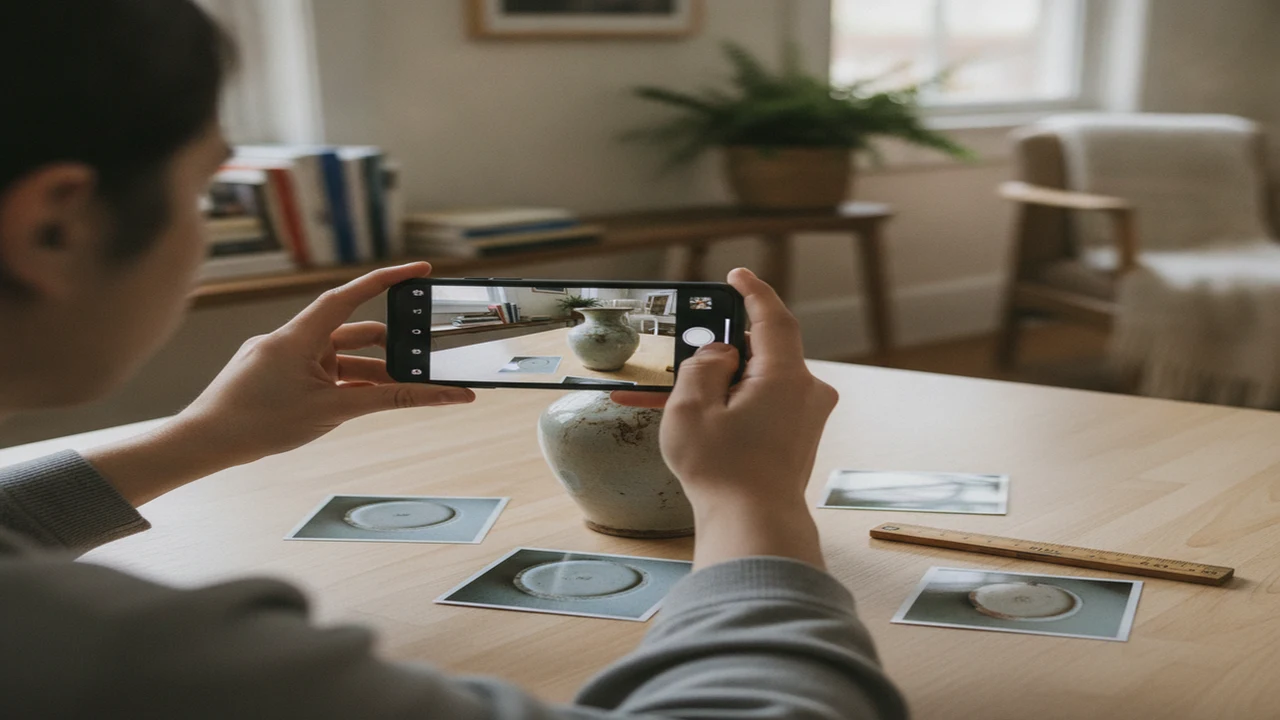
A photograph can contain more evidence than it first appears to. The curve of a chair leg, the screws in a hinge, the lettering in a hallmark, or the shape of a ceramic foot can all help narrow an object to a category, style, region, or broad period.
AI is useful because it can collect those clues quickly and turn them into possible names and search terms. Its polished description may still include guesses, however. The safest way to use an antique identifier by picture is to separate what the model directly observes from what it infers.
Quick answer: AI can inspect an antique photo for visible clues such as shape, material, decoration, maker marks, wear, and design style. It may suggest categories, periods, search terms, and comparable objects. A photograph alone cannot confirm age, provenance, authenticity, hidden damage, or current value. Important findings need confirmation through records, specialist references, sold listings, and physical inspection.
What does this mean?
Definition: An AI antique identifier uses image recognition and language models to compare visible features in a photograph with patterns and descriptions learned from large collections of images and text.
What information can AI see in an antique photo?
Image recognition begins with visible evidence. It can examine an object's outline, proportions, color, apparent surface texture, decorative motifs, hardware, joints, visible wear, labels, stamps, hallmarks, and maker signatures. For an old photograph itself, it may also notice clothing, studio props, borders, paper format, and backdrop style.
Some findings are direct observations. A model might report that a bowl has blue underglaze decoration or that a table uses turned legs. Claims about a likely workshop, country, period, or design movement are inferences built from associations with visually similar material.
AI does not understand the object's complete history simply because it recognizes its appearance. The table below separates questions a photo may help answer from questions that need records, measurements, market evidence, or physical inspection.
How does AI turn pixels into an antique description?
An image model converts colors, edges, shapes, textures, and spatial relationships into numerical patterns. It compares those patterns with associations learned from images and accompanying text. A language model then turns the likely matches into a readable description.
Optical character recognition, often shortened to OCR, attempts to read words and symbols. It can transcribe labels, signatures, serial numbers, date stamps, and hallmarks, although worn metal, reflections, curved surfaces, and decorative lettering can reduce accuracy.
Typed context can change the answer. Dimensions, weight, material, country, known purchase location, and family history may help the model reject unlikely matches. Ask it to explain which details came from the photograph and which came from your notes.
A detailed response remains an inference until its claims are checked. Readers choosing a tool can also see our guide to AI tools for recognizing antiques for a broader view of focused and general-purpose options.
Restoration can make scratches or faded details easier to inspect, but generated pixels may alter evidence. Wan and colleagues reported reduced visible artifacts and improved structural similarity on benchmark data in the CVPR old-photo restoration study from 2020. ShodhKosh research from 2023 likewise reported improved visual-quality measures for AI restoration methods, including color and surface detail, compared with traditional approaches. Neither result means a restored detail was present in the original.
Which photo details help an AI antique identifier most?
Start with one clear overall photograph, then add close-ups of marks, joints, undersides, backs, hardware, damage, and unusual construction. Use neutral lighting, sharp focus, an uncluttered background, and a reference such as a ruler. Avoid filters that change color or hide wear.
The useful clues depend on the category. Antique furniture identification benefits from views of joints, drawer construction, feet, locks, and the back. For a porcelain and ceramics identifier, photograph the base, foot rim, glaze, painted decoration, and any impressed or printed mark.
Jewelry and metal objects need clear views of clasps, fasteners, assay marks, soldering, and surface wear. For books, include the title page, publisher details, copyright page, binding, and defects. Antique watch value research usually needs the dial, case back, movement, reference number, and service information.
To identify antique marks and hallmarks, provide both a straight-on close-up and a wider image showing where the mark appears. The same approach helps identify maker signatures because placement and object context can distinguish a genuine mark from later writing.
Add measurements, weight, known location, purchase records, and ownership notes as text. These details give the model a better research path without asking it to extract information that the pixels do not contain.
- Photograph the full object from more than one angle.
- Include a ruler or another reliable scale reference.
- Capture marks straight on without glare or heavy shadow.
- Retain an untouched original when using enhancement tools.
- State which facts are known and which are family recollections.
What can AI not prove from a photograph?
A photograph cannot establish an unbroken ownership history, inspect internal construction, test material composition, confirm weight, or find every repair. It also cannot independently establish that an object is a period original rather than a reproduction, later revival, altered piece, or deliberate imitation.
Common errors include confusing similar woods or metals, misreading blurred marks, and assigning a precise year to an object that only shows a broad period style. A model may fill missing evidence with a plausible description, so confident wording should not be mistaken for stronger visual support.
Curio - Antique Identifier draws on historical information and comparable objects when producing estimates. Those results are research leads rather than certified appraisals. Some reviews of AntiqSnap: Antique Identifier report incorrect material identification and difficulty separating reproductions from genuine antiques.
- A photograph cannot establish provenance or ownership history.
- Image recognition may confuse reproductions, later revivals, and visually similar originals.
- Hidden repairs, internal construction, material composition, weight, and working condition may require physical inspection.
- Blurred or stylized marks can lead to incorrect text readings and false maker matches.
- A photo-based price range cannot reflect every condition issue, local market difference, buyer preference, or recent sale result.
Can an antique photo reveal how much an object is worth?
When someone asks, how much is my antique worth, four ideas need separating: identification, asking prices, sold prices, and professional appraisal. A seller may ask any amount. A completed sale shows what a buyer paid at a particular time and place. An appraisal is prepared for a stated purpose using supporting evidence.
Value can depend on the confirmed maker, age, rarity, dimensions, condition, provenance, buyer demand, location, and sale date. An antique market value range should therefore come from genuinely comparable objects, not merely items that look alike in thumbnails.
Use recent sold records, auction archives, specialist dealer references, an antique price guide, and services such as WorthPoint where appropriate. Match material, maker, size, date, condition, and sale venue as closely as possible. Our beginner process for moving from an AI guess to sold listings explains how to make that comparison more carefully.
A watch illustrates the problem with attempts to appraise antiques by picture. Movement type, reference number, originality, servicing, replaced parts, and mechanical condition can materially affect antique watch value, yet several of those details may be missing from one exterior photograph.
How should a beginner confirm an AI identification?
Use AI as the first stage of a documented search. Ask it to list visible facts separately from guesses, explain the clues behind each suggestion, and offer alternative identifications. Alternatives are useful because many styles were copied across regions and decades.
Search exact transcriptions of marks and signatures rather than relying only on the generated object name. Google Lens can surface visually similar pages, but resemblance alone does not confirm that two objects share a maker, age, or material.
For a repeatable workflow, follow these steps:
- Photograph: Capture the full object, multiple angles, marks, construction details, and visible damage.
- Crop: Make separate, sharp crops of each label, signature, hallmark, joint, or unusual feature.
- Transcribe: Type exactly what the mark appears to say, including uncertain letters and symbols.
- Describe: Ask the AI to separate direct observations from possible period, maker, and regional matches.
- Compare: Check specialist references and recent sold examples with matching materials, dimensions, and details.
- Verify: Consult an auction specialist, conservator, category expert, or qualified appraiser when a sale, restoration, insurance, or inheritance decision is involved.
- Document: Save photographs, source references, alternative matches, and unresolved uncertainty with the object record.
What privacy questions should you ask before uploading an antique photo?
An object photo may reveal more than the object. Backgrounds can contain faces, documents, addresses, reflections, security details, home interiors, or evidence that valuable property is stored at a location. Image files may also contain location metadata.
Crop unrelated details and remove location metadata where possible. Do not upload insurance papers, correspondence, ownership records, or certificates containing personal information merely to give the AI more context. Keep high-resolution originals offline and submit an export copy when that meets the task.
Check whether the service stores uploads, shares them with service providers, uses them to improve models, or offers deletion through account controls. Also check how long files remain available and whether deleting a chat removes its associated images.
Free access may be supported by subscriptions, advertising, data collection, account requirements, or usage limits that encourage an upgrade. The business model and privacy terms vary by app, so confirm the current policy rather than assuming that free means private or that paid means uploads are never retained.
When does a dedicated antique app beat a general chatbot?
A general chatbot is useful for follow-up questions, mark transcription, search terms, historical context, and alternative hypotheses. Its conversational format works well when you need to challenge an answer or combine a photograph with family records and measurements.
A dedicated antique identifier app may be more convenient for repeated scans, category fields, structured object records, collection tracking, and comparable listings. Curio - Antique Identifier emphasizes origin and period details, historical background, craftsmanship information, and PDF collection export.
AntiqSnap: Antique Identifier includes antique market price checks, total collection value tracking, and collector learning articles. These features suit a continuing catalog rather than a single question.
The best app to identify antiques depends on the workflow, not one universal ranking. Consider privacy expectations, free-tier limits, record structure, export options, and the level of specialist evidence required. Our chatbot and dedicated antique scanner comparison examines that choice in more detail.
Comparison
| Question about the object | What AI can inspect in the photo | What AI may infer | What needs outside confirmation |
|---|---|---|---|
| Object category | Shape, proportions, decoration, and visible use | Likely object type or category | Measurements, function, and specialist references |
| Maker or workshop | Labels, stamps, hallmarks, signatures, and construction | Possible maker or related workshop | Authoritative mark directories and documented examples |
| Approximate period | Style, hardware, print format, clothing, and design details | Broad era or design movement | Production records, expert research, and provenance |
| Material | Color, grain, reflectivity, glaze, and surface texture | Likely wood, metal, ceramic, textile, or stone | Weight, physical examination, and material testing |
| Condition | Visible cracks, losses, wear, stains, and corrosion | Possible condition concerns | Hidden repairs, stability, interiors, and working order |
| Authenticity | Consistency of marks, wear, style, and construction clues | Reasons for further investigation | Physical inspection, provenance, testing, and specialist opinion |
| Market value | Visible category, apparent condition, maker clues, and size reference | Search terms and a preliminary comparable range | Confirmed identity, recent sold evidence, location, and appraisal purpose |
Limitations
Frequently Asked Questions
Can AI identify an antique from one photo?
It may suggest a category, style, period, or possible maker from one clear image. Multiple angles, measurements, marks, and construction details usually provide a stronger research starting point.
Can an AI antique identifier tell whether an item is genuine?
Visual clues can raise or lower confidence, but they cannot independently verify authenticity. Provenance, internal construction, materials, repairs, and specialist inspection may all matter.
Is there a free app to identify antiques?
Some tools may offer free access, but current terms can include scan limits, advertisements, account requirements, or restricted reports. Check dated listing and privacy information before uploading.
Can an antique identifier app estimate market value?
An app may suggest a rough range or comparable objects. Antique Identifier TIQ is one example of a dedicated category app, but any result should be checked against genuinely comparable sold records and should not be assumed to be a certified appraisal.
What photos should I take of a maker mark or hallmark?
Take a sharp, straight-on close-up in even light, followed by a wider photo showing where the mark appears. Add another angle if the surface is curved or reflective, and include a scale reference when useful.
Is Antique Identifier TIQ suitable for saving a collection?
Check Antique Identifier TIQ's current listing or documentation for collection-saving, export, deletion, backup, and privacy options. Those details determine whether it fits a long-term cataloging workflow.
Should I use Google Lens, a chatbot, or an antique appraisal app?
Google Lens is useful for broad visual matches, a chatbot supports conversational analysis, and a dedicated antique appraisal app may provide structured records and focused fields. The right choice depends on whether you need a quick search, flexible interpretation, or continuing collection management.