
Best AI Tools for Recognizing Antiques in 2026
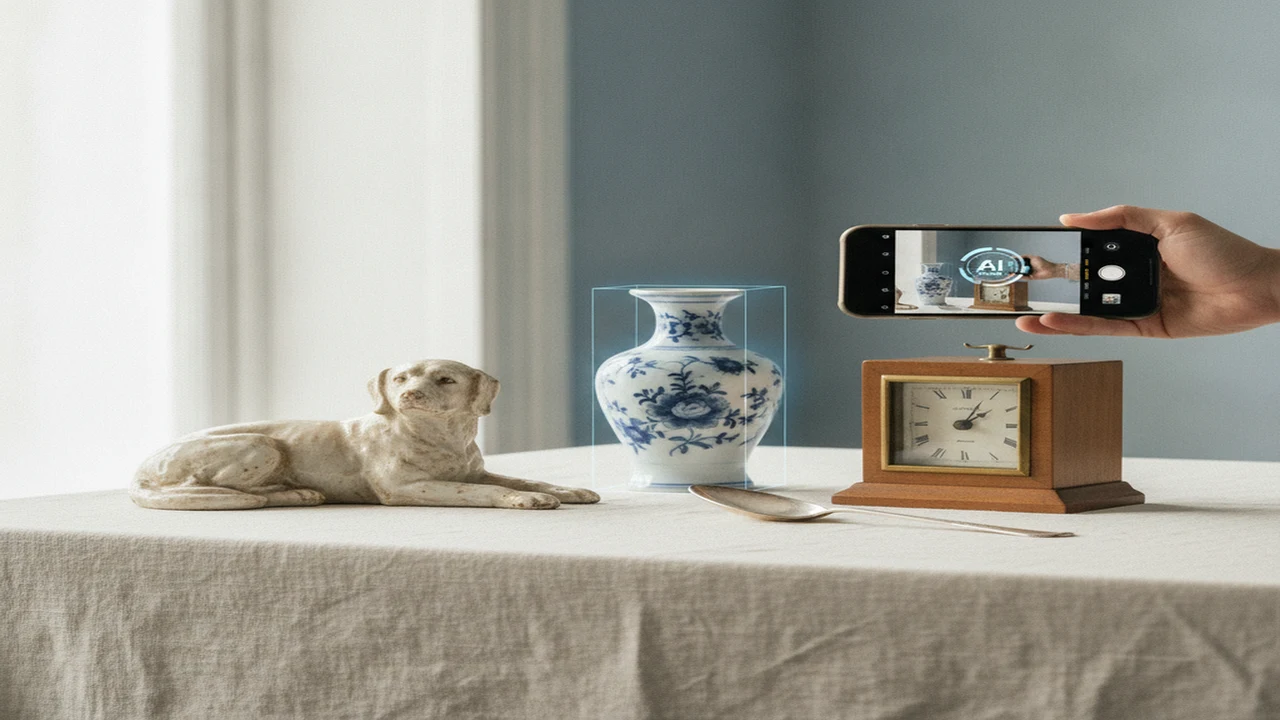
Photographing an old vase or inherited clock can produce an answer in seconds, but the result may combine several different claims: what the object is, when it was made, who made it, and how much it might sell for. Each claim requires different evidence.
The best AI tools for recognizing antiques provide a useful starting record rather than a final certificate. Beginners should choose according to workflow, privacy, collection features, and access to supporting price information, not promises of instant appraisal.
Quick answer: The best tool depends on the job. Dedicated antique apps can organize photos, suggest an identity or period, and estimate a market range. Google Lens is useful for finding visual matches, while WorthPoint can support price research. None can confirm authenticity or replace a qualified antique appraiser when an object is valuable, rare, or disputed.
What does this mean?
Definition: An AI antique identifier analyzes visible details in a photo, such as shape, decoration, materials, marks, and construction, then suggests an object type, period, maker, or value range based on patterns and comparable information.
What can an AI antique identifier actually recognize?
An image-recognition model sees pixels. It cannot hold an object, feel its weight, smell old wood, open a clock movement, inspect hidden joints, or look beneath a later repair. Its suggestions come from visible similarities between the uploaded photograph and patterns represented in its data.
Useful outputs can include a broad object category, a possible era, visible material, decorative style, maker signature, hallmark, and obvious condition clues. A furniture photograph might suggest a cabinet form and design period. A porcelain and ceramics identifier might recognize a decoration pattern, factory mark, or likely object type.
For silver, jewelry, and clocks, a close-up may help identify antique marks and hallmarks or interpret a maker signature. Vintage household objects can sometimes be matched to catalog pages or marketplace listings. These are candidate identifications that give the owner better terms for further research.
Identification is not authentication. Recognizing the design of a chair is different from proving when that particular chair was built. An antique market value range is also different from a formal appraisal prepared for insurance, tax, estate, or legal purposes.
The amount of online reference material affects price research. eBay reported more than 370 million listings in its collectibles categories globally in 2024. Its 2025 marketplace overview also said that more than 60% of collectibles sold on the platform were pre-owned or vintage. These figures show the scale of potential comparison data, not the accuracy of any individual AI result.
Which AI tools are best for recognizing antiques in 2026?
Our shortlist considers photo identification, explanatory context, value research, collection tools, pricing clarity, privacy information, and ease of use for beginners. The order reflects different workflows rather than measured accuracy.
Antique Identifier TIQ is a dedicated option for people who want to identify antiques by photo, review suggested history and authenticity clues, see a possible value range, and save records in a collection. Those outputs are research guidance, not verified appraisal findings.
Antique Identifier - Relic creates a compact record from one photograph. Its listed functions cover material identification, a condition summary, and possible era identification. This may suit someone who wants several descriptive fields without building a record manually.
Antique Identifier By Picture scans or imports a photograph and suggests period, material, age, and object identity. Curio - Antique Identifier emphasizes origin, period, craftsmanship information, visually similar listings, and collection syncing through an account.
AntiqSnap: Antique Identifier combines photo recognition with a condition suggestion, market price checks, and collection value tracking. This makes it oriented toward owners monitoring multiple objects rather than investigating only one find.
Google Lens is the broad visual-search choice. It can locate similar shapes, patterns, motifs, and listing photographs across the web, but it is not a complete antique appraisal app. WorthPoint is better understood as a separate historical-price research resource, not an AI authentication service.
One secondary overview of antique identification apps also describes visual matching and comparison-led research as common parts of this category. Product functions and subscription terms can change, so current official listings remain the better place to confirm access.
When does a dedicated antique app beat a general chatbot?
A dedicated antique identifier app can guide the user through photographing an object, recording the proposed identity, saving notes, organizing a collection, and returning to value research later. That structure matters when cataloging a cabinet of ceramics, an estate collection, or a series of vintage household objects.
A general chatbot is useful after the first scan. It can explain terms such as dovetail joint, repoussé, transferware, or assay mark and help create a research checklist. Unless it has suitable search access and current sales information, however, it may rely on general knowledge rather than recent comparable sales.
Google Lens serves another purpose. It searches broadly for visually similar web images and can reveal retailer pages, museum records, auction pages, and unrelated reproductions. It is useful for discovery, but the user must decide whether a match shares the same construction, marks, dimensions, and materials.
The Antique Identifier App is one purpose-built route for creating repeatable photo records. Use a dedicated app for ongoing cataloging, visual search for broad matches, and a chatbot for interpreting unfamiliar language.
For a deeper breakdown of those roles, see our guide to choosing between an AI chatbot and a dedicated antique scanner. When authenticity or significant money is involved, move beyond software and consult the appropriate human specialist.
How should you photograph an antique for better identification?
A recognition tool needs both context and detail. A full-object image shows proportions and overall style, while separate close-ups reveal construction, damage, labels, and marks. Do not replace the full view with a tightly cropped signature.
Use bright indirect light, sharp focus, and a plain background. Avoid filters, portrait blur, glare, heavy compression, and digital edits that clean up faded or damaged marks.
- 1. Clean: Remove loose surface dust only when it is safe. Do not polish, wash, dismantle, or scrape an object merely to improve a photograph.
- 2. Position: Place the object against a plain background in bright indirect light. Include a ruler or another clear size reference without covering the object.
- 3. Photograph: Take a sharp full-object image from the front, followed by side and rear views.
- 4. Capture: Add separate close-ups of the underside, back, joints, fasteners, hardware, damage, repairs, labels, signatures, serial numbers, and hallmarks.
- 5. Crop: Make a copy focused on an important mark so the model can inspect it, while keeping the original full-object photograph for context.
- 6. Scan: Upload the clearest views separately rather than combining many small pictures into one crowded collage.
- 7. Cross-check: Repeat the search with another useful angle or mark and compare which descriptive details remain consistent.
- 8. Document: Save the original photographs, dimensions, ownership notes, and any candidate maker, pattern, or period supplied by the tool.
How can you confirm an AI antique identification and value range?
Start by extracting searchable details from the result: probable maker, mark, material, dimensions, style, period, object type, and model or pattern name. Search combinations of those details rather than relying on a broad query such as old vase.
Compare several visual matches. Reject examples with different dimensions, construction, decoration, hardware, marks, or component placement, even when the overall shape looks similar. Google Lens can locate candidate pages, while WorthPoint can be one source for historical-price research.
Look for sold prices where available. An active asking price only shows what a seller hopes to receive. A sold record is more useful when the object, material, dimensions, condition, and selling venue are genuinely comparable.
The beginner process from an AI guess to a sold listing explains how to narrow weak matches without accepting the first answer. Antique Identifier TIQ can preserve the initial photo record while the maker, period, and price evidence are checked elsewhere.
Condition, provenance, restoration, missing parts, regional demand, and sales venue can create a wide range. eBay seller education materials from 2024 reported that graded trading cards and coins could sell for two to ten times the price of comparable ungraded items. Although certification works differently for most antiques, the statistic illustrates why condition and independently documented status can strongly affect value.
What should you check about privacy and free tiers?
An antique photograph can reveal more than the object. The frame may contain a home interior, family photographs, an address on a document, collection storage details, serial numbers, or location metadata recorded by the phone.
Crop unrelated personal details, disable unnecessary location metadata, and review the app's policy before uploading. Look for explanations of photo storage, deletion requests, account removal, sharing, and use of submissions for model training. Silence in a listing does not mean images stay private.
An app described as free may be free to download while limiting scans, saved histories, comparisons, collection tools, or exports. Confirm current in-app purchases and trial renewal terms through the official store listing. Pricing or scan allowances that were not clearly stated in the reviewed documentation cannot be assumed.
The listing information reviewed for Antique Identifier - Relic says a subscription is required for its AI identification, history, comparison, and collection functions. For Antique Identifier TIQ or any alternative, readers should inspect the current App Store privacy and purchase panels rather than relying on an older review.
Our explanation of what AI can learn from an uploaded antique photo can help users decide which views are necessary. Upload focused object photographs instead of an uncropped image that exposes the surrounding room.
Where do AI antique identification tools fail?
Comparison
| Tool | Best for | What the image analysis returns | Collection features | Pricing or access point to verify |
|---|---|---|---|---|
| Antique Identifier TIQ | Structured identification and saved research | Suggested identity, history, value range, and authenticity clues | Saved collection records | Check current App Store purchases and allowances |
| Antique Identifier - Relic | Compact records from a single photograph | Possible identity, era, material, condition, origin, and USD range | Collection functions are listed | Subscription required for AI and collection functions |
| Antique Identifier By Picture | Period and material suggestions | Possible identity, age, period, material, and value | Stores photographed finds | Check current advertising, limits, and purchase terms |
| Curio - Antique Identifier | Background and similar-listing research | Origin, period, craftsmanship, value range, and similar objects | Account collection sync | Current access terms were not clearly established in the reviewed notes |
| AntiqSnap: Antique Identifier | Condition and collection value tracking | Identification, condition suggestion, and market price guidance | Tracks objects and estimated collection value | Verify current scan limits and subscription terms |
| Google Lens | Broad visual discovery | Visually similar images, pages, products, and listings | No dedicated antique collection workflow considered here | Access and account behavior depend on the current Google service |
| WorthPoint | Additional historical-price research | Comparable records rather than a complete photo appraisal | Research-oriented rather than an antique cataloging app | Verify current membership and database access |
Limitations
Visually similar originals, reproductions, later copies, and deliberately false or incomplete marks can confuse image recognition. Restoration, replaced hardware, refinishing, and modern components may also change the visible evidence. Different crops, lighting, and angles can therefore produce changing suggestions.
A photograph cannot establish provenance, inspect hidden construction, test metal or wood, verify age scientifically, assess weight, or evaluate a clock or other mechanism in operation. AI output also cannot establish legal title, cultural-property status, certified authenticity, or insurance value.
Reviews referenced in the supplied research notes report that Antique Identifier By Picture can return different results between scans and can make mistakes involving makers or regions. Reports about AntiqSnap mention incorrect wood or material suggestions and difficulty distinguishing some reproductions from genuine antiques.
Curio's value guidance is based on historical information and comparable objects rather than a certified appraisal. Across the category, active asking prices, stale listings, loosely similar objects, condition differences, restoration, location, and sales venue can distort an antique market value range.
Seek a qualified antique appraiser, auction specialist, conservator, or relevant museum expert for a high-value, rare, disputed, or heavily restored object. Human advice is also appropriate for insurance, estates, legal disputes, major restoration decisions, and suspected cultural-property concerns.
Frequently Asked Questions
Can AI identify an antique from one photo?
It can suggest a candidate identity from one clear photograph, especially for a common object or visible mark. Multiple views are better because the underside, back, joints, hardware, damage, and dimensions may contain evidence missing from the front view.
What is the best app to identify antiques for beginners?
The best app depends on whether the beginner needs a single visual match or a saved collection workflow. A dedicated app can organize results, while Google Lens is useful for broad discovery. Check current scan limits, privacy terms, and subscription details before choosing.
Can Antique Identifier TIQ tell me how much my antique is worth?
Antique Identifier TIQ can provide a research range based on its available information and comparisons. That range is not a guaranteed selling price or formal appraisal, so confirm it with relevant sold records and condition evidence.
Is Google Lens useful for antique identification?
Yes. Google Lens can find similar patterns, furniture forms, marks, and listing photographs. It may also match reproductions or merely similar objects, so compare construction, dimensions, material, decoration, and marks before accepting a result.
Can an antique appraisal app confirm that an item is genuine?
No photo-based app can certify authenticity by itself. Authentication may require physical inspection, provenance research, material analysis, specialist knowledge, or scientific testing.
How do I identify antique marks and hallmarks?
Take a sharp close-up in indirect light and keep an uncropped picture of where the mark appears on the object. Search the visible letters, symbols, numbers, and shape, then compare them with several reliable references and examples from the same object category.
Are antique identifier apps free?
Some are free to download but may restrict scans, histories, comparisons, exports, or collection features. Check the current official store listing for subscriptions, trial renewals, and in-app purchases because access terms can change.
Should I upload photos of valuable antiques to an AI app?
Upload only the views needed for identification. Remove location metadata where appropriate, crop home interiors and personal documents, conceal unrelated serial or ownership information, and read the service's storage, deletion, sharing, and model-training terms first.