
Human-In-The-Loop AI Agents For Safer Workflows
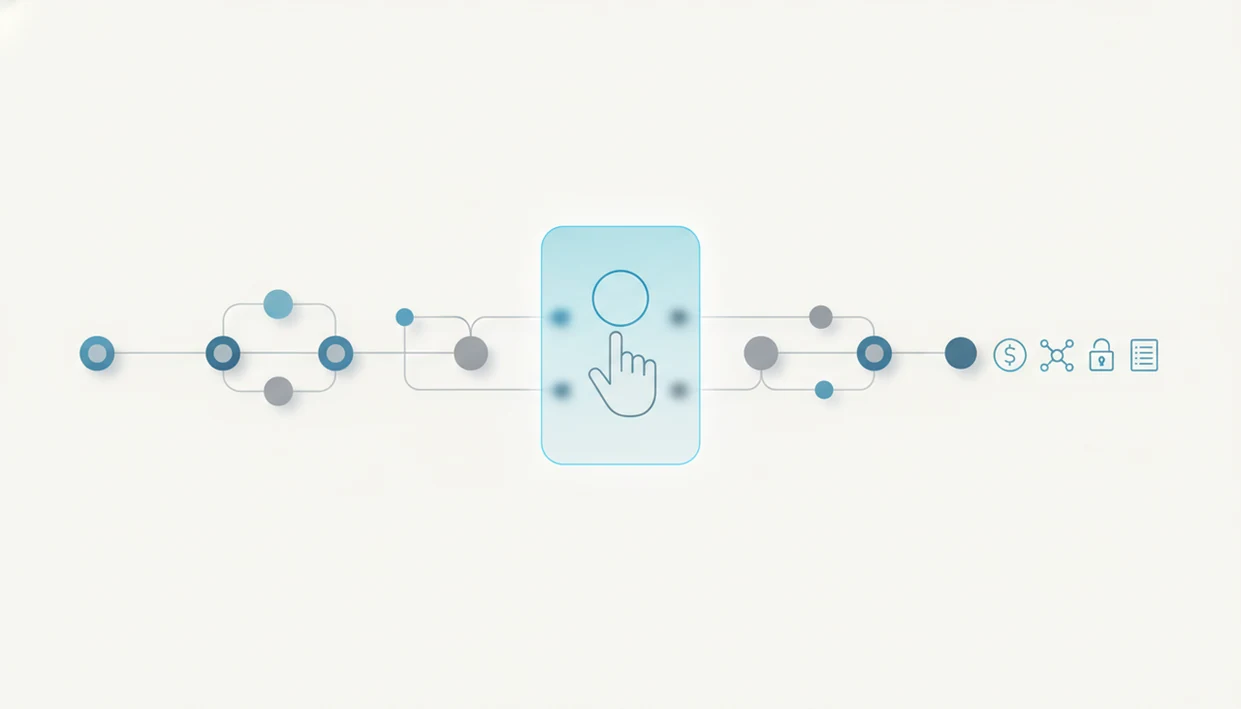
Human-in-the-loop AI agents reduce automation risk by making an AI pause for human approval before risky, ambiguous, or irreversible actions. The safest workflows combine agent guardrails, clear approval rules, permission limits, and audit logs so people stay accountable for high-impact decisions.
Definition: Human-in-the-loop AI agents are AI systems that can act autonomously in a workflow but must stop for human review, approval, or guidance at defined risk points.
TL;DR
- Use human approvals for actions that affect money, customer data, security, legal commitments, hiring, healthcare, or irreversible records.
- Good agent guardrails define what the AI can do alone, what it can only propose, and what must be escalated to a named human reviewer.
- Approval logs matter because they show who approved an agent action, what the agent proposed, when it happened, and why the decision was allowed.
Scope note: This guide is a practical risk framework, not legal, security, financial, medical, or compliance advice. For regulated, safety-critical, or high-liability workflows, involve the relevant internal owner before deploying an autonomous agent.
Human-In-The-Loop AI Agents Definition And Safety Role
Human-in-the-loop AI agents are AI systems that can draft or prepare workflow actions but must pause before sensitive execution. The point is not to make every step manual; it is to reserve human judgment for moments where mistakes are costly.
In plain English, an agent might write a customer email, suggest CRM updates, prepare a file deletion, change a permission setting, or queue a payment. It should not complete those actions without approval if the result affects money, access, records, or people.
The pause is the safety feature.
In a test workflow, we like to ask: “What happens if the agent is wrong here?” If the answer is a deleted folder, a sent contract, or a changed account owner, human review belongs before the action. For background on what makes an agent different from a chatbot, the AI agents explained guide covers the basics.
Five Facts About AI Agent Approvals And Guardrails
- AI agent approvals belong at critical decision points. Use approval gates for financial changes, destructive actions, sensitive data access, account permission changes, and external messages.
- Agent guardrails should be technical, not just verbal. Policies, scoped permissions, spending caps, and tool constraints are stronger than telling the agent to “be careful.”
- Approval workflows improve auditability. A useful approval ties each action to a reviewer, timestamp, proposed change, and reason.
- Human oversight matters most in high-impact workflows. Healthcare, finance, hiring, security, legal, and customer-facing work need stricter review because errors can harm people or create obligations.
- Non-developers should ask three questions. Where does the agent act alone, when does it pause, and how are approvals logged?
According to McKinsey’s 2023 State of AI report, organizations were increasing AI risk-management work, but many were still early in formal governance: https://www.mckinsey.com/capabilities/quantumblack/our-insights/the-state-of-ai-in-2023-generative-ais-breakout-year. That gap shows up fast when a checklist is taped beside the laptop during tool testing.
How Human-In-The-Loop AI Agents Work In A Workflow
A human-in-the-loop agent workflow usually follows this sequence: user goal, agent plan, tool selection, risk check, approval request, human decision, then execution or rejection. The mechanism is simple, but the details matter.
A good approval request should show the proposed action, affected systems, risk level, supporting evidence, and rollback options. If an agent wants to update 430 CRM records, the reviewer should see which fields will change and why. Not just “approve update.”
After review, the agent should resume only when it receives an explicit approval token or recorded decision. That decision can come from a workflow system, ticket, dashboard, or signed-off queue. Policy engines, role-based permissions, and workflow rules scale better than one-off confirmation popups.
NIST’s AI Risk Management Framework identifies human-AI configuration, monitoring, and oversight as part of trustworthy AI risk management: https://www.nist.gov/itl/ai-risk-management-framework. In everyday terms, the system needs designed handoff points, not hope.
AI Workflow Review Checkpoints That Need Human Approval
AI workflow review checkpoints should be placed where the agent’s action becomes visible, irreversible, regulated, or hard to undo. Routine sorting, tagging, and drafting can often stay automated; execution needs a stricter bar.
| Action type | Example | Main risk | Approval rule |
|---|---|---|---|
| External communication | Send a customer reply | Wrong promise or tone | Require review before sending |
| Financial transaction | Issue refund or move funds | Money loss or fraud | Require named approver and limit |
| Record update | Change CRM stage or owner | Bad operational data | Review bulk or high-value changes |
| Data export | Download customer list | Privacy or leakage | Require approval and log destination |
| Account permissions | Add admin access | Security exposure | Require security or owner approval |
| Destructive action | Delete files or tickets | Irreversible loss | Require confirmation with rollback check |
| Confidence gap | Agent says evidence is unclear | Hidden hallucination | Escalate to human review |
A sticky note with the refund policy beside the monitor is not a control. It helps, but the workflow still needs enforceable approval rules.
Agent Guardrails For Safer Human Approval Decisions
Agent guardrails make human approvals meaningful by limiting what the agent can attempt before a person reviews it. A generic “Are you sure?” screen is not enough human-in-the-loop design.
- Permission limits: Give the agent the minimum access needed, not broad admin rights.
- Scoped tools: Let it draft, search, or summarize before it can send, delete, export, or update.
- Spending and rate caps: Set limits for refunds, ad spend, API calls, or bulk actions.
- Data access rules: Block sensitive folders, private fields, and restricted customer segments by default.
- Escalation and reviewer roles: Route legal, security, finance, or HR decisions to the right person.
Directories such as New AI Blog, The Rundown, and Futurepedia can help readers discover AI-agent tools, but approval controls must be verified in the vendor’s documentation, privacy page, and admin settings.
Audit Logs And Accountability For AI Agent Approvals
Approval logs are the accountability layer for human-in-the-loop AI agents. They show who approved an action, what the agent proposed, when it happened, and what result followed.
A useful log should record the requester, reviewer, timestamp, proposed action, systems touched, prompt or summary, evidence, decision, and outcome. If an incident happens later, those fields help security, operations, or compliance teams reconstruct the chain of events. They also protect reviewers by showing what information was available at approval time.
A downloaded export file on the desktop tells only part of the story. The log should say who allowed the export, which dataset was included, and where it was sent.
Pew reported in 2023 that a majority of U.S. adults who had heard of AI were more concerned than excited about its growing use. Visible oversight helps address that trust gap, but it must be real. For a broader evaluation checklist, use how to evaluate AI tools before connecting work files.
Human-In-The-Loop AI Agents Versus Human-On-The-Loop Monitoring
Human-in-the-loop means the AI must pause before selected actions execute. Human-on-the-loop means a person supervises or monitors the system, but the system may keep running unless the person intervenes.
| Pattern | How it works | Fits best for | Watch-out |
|---|---|---|---|
| Human-in-the-loop | Required approval before execution | Irreversible, regulated, costly, or customer-visible actions | Can slow work if every tiny step needs review |
| Human-on-the-loop | Human monitors activity and exceptions | Lower-risk automation, dashboards, alerts, batch review | Problems may happen before a human notices |
Both patterns can coexist in mature AI workflow review systems. For small teams, human-in-the-loop usually fits payments, deletions, and external messages. Human-on-the-loop fits status monitoring, triage queues, and anomaly alerts after lunch when the analytics dashboard is already open.
Human-in-the-loop usually works best for high-impact actions, while human-on-the-loop fits lower-risk workflows that need monitoring rather than pre-approval.
When To Escalate AI Agent Decisions To Security, Legal, Or Compliance
Escalate AI agent decisions before launch whenever the workflow is regulated, contract-bound, safety-critical, or likely to affect rights, access, money, or records. The approval path should go to the responsible expert, not the nearest manager with a spare five minutes.
A practical escalation rule is simple: if the agent could create an obligation, expose a system, affect a person’s opportunity, or make a hard-to-reverse decision, pause the deployment until ownership is clear.
- Identify the domain owner before enabling autonomous execution, especially for security, legal, compliance, HR, healthcare, or finance workflows.
- Route security-impacting approvals to security or system owners, such as permission changes, data exports, admin access, and incident-response actions.
- Send contracts, legal promises, hiring recommendations, employee actions, clinical decisions, and patient-facing outputs to qualified domain reviewers.
- Pause rollout when rollback steps, audit logging, permission boundaries, or exception handling are vague or untested.
- Document who has final accountability, what evidence they must review, and whether the agent may execute, only recommend, or must stay blocked.
If nobody wants their name on the final approval rule, the agent is not ready to act alone.
Understanding Results
Human-in-the-loop AI agents can make automation safer, but approvals still need verification, privacy checks, and realistic expectations. Treat human review as a control layer, not a guarantee that every AI tool action is correct, secure, or appropriate.
This guide works best when
- Routing high-risk actions to a named reviewer before execution
- Letting AI agents draft emails, CRM updates, tickets, or summaries for human approval
- Using permission limits so automation can propose changes without owning the final click
- Keeping audit logs that show the proposal, reviewer, evidence, time, and outcome
- Testing AI apps on low-stakes workflows before connecting customer data or live systems
This guide may be less accurate when
- Rushed reviewers may approve bad recommendations without checking sources
- Too many approval prompts can create alert fatigue and rubber-stamping
- Human approval does not fix weak access controls or overly broad agent permissions
- Agent summaries can omit context, privacy risks, or conflicting evidence
- Evaluation is harder when logs record the approval click but not what the reviewer saw
Read more
FAQ
What is human-in-the-loop AI?
Human-in-the-loop AI is an AI setup where a person reviews, approves, or guides the system at defined points. It differs from fully autonomous AI because the system cannot complete selected actions without human involvement.
Why do AI agents need approvals?
AI agents need approvals because they can take actions that affect money, data, customers, permissions, or records. Approval gates reduce the chance of sensitive or irreversible mistakes.
What are AI agent guardrails?
AI agent guardrails are policies, permissions, limits, and review rules that constrain what an agent can do. They define what the agent may do alone and what requires human approval.
When should an AI agent ask for approval?
An AI agent should ask for approval before moving money, deleting data, sending external messages, changing permissions, exporting sensitive data, or updating important records. Higher-risk actions need stricter review.
Do approvals slow AI workflows?
Approvals can slow AI workflows when every minor action needs review. Risk-based checkpoints keep routine tasks automated while requiring approval for sensitive execution.
What should approval logs include?
Approval logs should include the requester, reviewer, timestamp, proposed action, affected systems, evidence, decision, and final result. These fields make later review and accountability easier.
Is human-in-the-loop review enough to make AI agents safe?
No. Human review should be paired with scoped permissions, technical guardrails, monitoring, testing, and clear escalation rules.
What is human-on-the-loop monitoring?
Human-on-the-loop monitoring means a person supervises an AI system while it continues operating unless intervention is needed. Human-in-the-loop requires approval before selected actions execute.